5 New Year’s resolutions for a more Christ-centered family

5 family-affirming New Year’s resolutionsMy first New Year’s resolution took place as a young adult, when I pledged to read the Bible—from Genesis to Revelation—in one year. I remember enjoying Genesis and Exodus, struggling a bit with Leviticus and Numbers, and then getting bogged down in Deuteronomy.

Deuteronomy at the time was like quick sand, and I never made it out.

I since have made it through Deuteronomy, but I’m still mostly a failure at New Year’s resolutions. For instance, my 2014 New Year’s resolution was to plant garlic. It’s unique and incredibly healthy, and it would save my family a bit of money. But I never even purchased a bulb.

Still, New Year’s resolutions are worth pursuing, especially when it involves something as significant as your faith or your family. While resolutions themselves aren’t mentioned in Scripture, the Bible does have a lot to say about second chances and new beginnings (Psalm 51:10-11).

I imagine even the Apostle Paul would have made New Year’s resolutions. After all, it was never-look-back Paul who wrote, “But one thing I do: forgetting what lies behind and straining forward to what lies ahead, I press on toward the goal for the prize of the upward call of God in Christ Jesus” (Philippians 3:12-15).

So what type of resolutions should parents make this year? Here are five suggestions that—if followed—are sure to change your family life for the better:
Continue reading
‘Dad, did baby Jesus cry?’ — 3 ways to teach your children great theological truths this Christmas

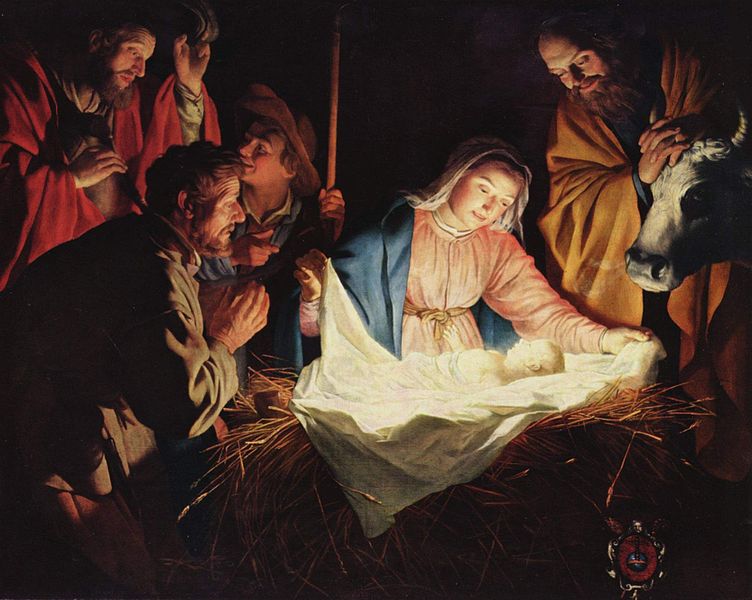
The Adoration of the Shepherds (Gerard van Honthorst), 1622.

The Adoration of the Shepherds (Gerard van Honthorst), 1622.

Kids have a way of asking questions we adults have never pondered.

Once, my inquisitive son was reading a science book and looked up at me with a puzzled look.

“Dad, are there germs on germs?”

I was confused, and he knew it.

“Yeah,” he continued. “There are germs on us. But are there germs on those germs, and then germs on those other germs, then germs on those germs?”

Maybe he was hoping that all those germs would duke it out in a battle royal and kill one another – and we’d never get sick.

Honestly, I’m still not sure what the answer is.

But the other night he asked me a relatively easy one.

“Dad, did baby Jesus cry?”

“Of course,” I responded.

“Huh?” he replied, sort of shocked.

“All babies cry, because that’s how they communicate,” I said. “And it’s not a sin for a baby to cry.”

He had been singing “Away In A Manger,” a wonderful Christmas tune that has the unfortunate lyric concerning the Christ Child: “No crying he made.”

Christmas is a wonderful time of the year to reinforce the Gospel to our children, simply because everyone they know – their friends, their teachers, their neighbors – is celebrating it. In other words, our children can’t go anywhere without being reminded of Christmas, even if it is a sanitized, secular version.

But we don’t have to battle the local box store to put “Christ back into Christmas.” We can do that in our homes, beginning by what we tell our kids about Jesus.

Here’s three ways parents can teach their children deep theological truths about Christ this season, using simple language:
Continue reading

4 countercultural reasons my family doesn’t celebrate Santa (and why my kids think he’s Noah)

4 countercultural reasons my family doesn’t celebrate Santa (and why my kids think he’s Noah)

I don’t own a pair of those record-everything “Google Glasses,” but there are times I wish they had been invented much sooner.

Like the moment in 2010 when my oldest son – then 2 – first saw an image of Santa Claus. He and I had been enjoying a father-son night at a Cracker Barrel restaurant, having just finished off a shared plate of chicken and dumplings after coloring the kids’ menu.

But before leaving we wanted one more moment in front of the restaurant’s fireplace, and it was that moment I could have used those Google Glasses.

“Noah!” he shouted.

Caught off guard and trying not to laugh, I replied, “Did you say Noah?”

“Yeah, Noah!” he excitedly responded, pointing upward at the fireplace mantle, where a small statuette of Santa Claus resided.

And then it hit me: This is how a child who has not been raised to know anything about Santa responds.

I grew up believing in Santa – studying toy catalogs and writing letters to the North Pole — but when I reached adulthood I pretty much decided that I didn’t want to continue that tradition with my children. And then I married someone who felt the same way. And so it was an easy decision: We wouldn’t “do Santa.”

Of course, such a decision would have no impact on anyone at all if my family lived in the Alaskan wilderness or in the northern parts of British Columbia or pretty much anywhere in Wyoming. But we don’t. We live in a town near a mid-sized city. We interact with people, and our kids do, too.

When our kids were very little, we never mentioned Santa around them. No books about Santa. No TV shows about him. Nothing. When strangers asked them what Santa was bringing them for Christmas, they responded with a “what-planet-are-you-from” look – and we all laughed.

As they aged, though, they learned from friends who Santa was. But because we didn’t reinforce the Santa story at home, they naturally placed him alongside other fictional characters such as Clifford The Big Red Dog and Charlie Brown. It was only when they were 5 or 6 and running into friends who “believe in” Santa that they came home with questions. And so we tell them that some families practice Santa and some kids believe he’s real — and that we shouldn’t ruin it for them. But, of course, kids are kids, and everything doesn’t always go as planned.

Sadly, Santa has turned into one of those taboo subjects for Christians that we can’t discuss without dividing into camps, getting angry, and questioning everyone’s motives, patriotism and faith. We have friends on both sides of this, and we get along just fine.

My family does eat apple pie and we do celebrate the Fourth of July and we even like baseball. We just don’t “do Santa.” Here’s four reasons why:
Continue reading

3 easy ways to teach your kids the REAL (non-PC) Pilgrims’ story

3 easy ways to teach your kids the real (non-PC) Pilgrims’ storySeveral years ago I was in an airport with an hour or so to waste, and decided to go hunting for a shop that sold one of my favorite sweet treats – frozen yogurt.

But when I found a yogurt shop, my heart sank.

“Sorry – no yogurt today,” a matter-of-fact sign read.

Huh? No yogurt? Why? You’re a yogurt shop!

Alas, I didn’t get any yogurt that day. But I did get a memorable story that applies directly to our modern day celebration of Thanksgiving. Let me explain.

Thanksgiving became a national holiday in 1863, when President Lincoln proclaimed a day of “Thanksgiving and Praise to our beneficent Father who dwelleth in the Heavens.” Lincoln had it right, but modern-day America has drifted far, far from that first proclamation.

America still celebrates Thanksgiving, and it still gives thanks. But for the most part, it’s forgotten the “Whom” it’s thanking.

We’re the yogurt shop with no yogurt, trying to celebrate Thanksgiving without give “thanks” to God. (And we’re not about to reference those Christian Pilgrims.)

This perhaps is best seen when searching for children’s books that recount the story of the Pilgrims – a group of men, women and children who crossed the Atlantic to find religious freedom. Sadly, few children’s books acknowledge either the Pilgrims’ faith or their purpose in crossing the sea. My kids have one book on their bookshelf that says the Pilgrims wanted to hold a celebration feast because they “felt so happy about their good fortune.” The Pilgrims, essentially feeling lucky? I doubt that’s how the Pilgrims – who believed God guided their every step – truly felt.

I’m always looking for children’s products that teach the true story of Thanksgiving, but the list is fairly short. I spent a few minutes at a major chain bookstore the other day, looking for books (aimed at young children ages 4-8) that give more than a one-sentence reference to the Christian part of the story. In the end, I found two.
Continue reading

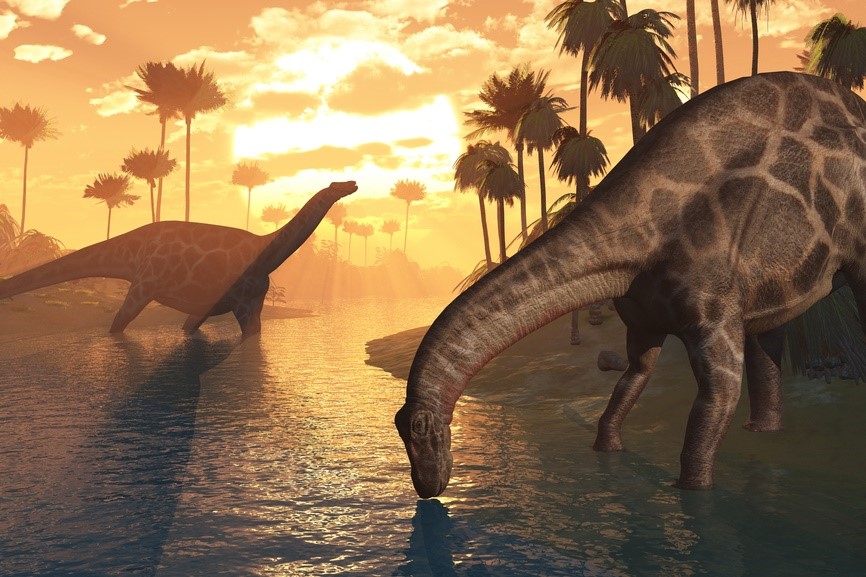
‘Dad, will dinosaurs be in heaven?’ (the answer may surprise you)

‘Dad, will dinosaurs be in heaven?’ (the answer may surprise you)Sometimes I wonder if we Christians have missed the mark when it comes to discussing dinosaurs. I think about this often because I have a 6-year-old who, honestly, wishes he were a triceratops.

Too often we seem to get lost in arguments over the when and how—for instance, “Did they live thousands or millions of years ago?”—and we fail to ask a more basic question: Why did God create dinosaurs? For instance, did He make these majestic creatures simply so we could split up into two camps (young-earthers and old-earthers), or did He make them for the same reason He made the rest of creation: for His glory? And if he made them for His glory—which He did—then why did He have them all die off before you or I would even see them?

Here’s what I think: It’s because we will see them again someday, after creation is restored. There is scriptural evidence for this, and that should excite all Christians—your kids, my kids and the “kid” in all of us—and make us even more amazed at God’s plan for the future.

To build the case for why dinosaurs just may be in heaven, we need to start with a more basic question: Will animals be in heaven? I don’t know whether your specific pet or mine will be in heaven, but the Bible seems clear that animals—generally speaking—will be there. Consider …
Continue reading