3 ways to teach your kids about Easter, death and the cross

3 ways to teach your kids about Easter, death and the cross

My 4-year-old daughter Maggie has always been a bit studious for her age. She knew colors when she was 2, was reading the entire alphabet when she was 3, and by the time she turned 4, could read a digital clock.

So I was a bit surprised when my wife told me toward the end of last year that Maggie had failed a holiday pop quiz. The question from my wife was the same one that Charlie Brown shouted to all of his friends: What’s Christmas all about?

Maggie’s answer: “presents.”

I’m sure she said it in an oh-so-sweet voice, and I bet she even had an oh-so-precious smile on her face, but she also was oh-so-wrong. Christmas, my wife told her, is about Jesus—even if presents can be part of innocent holiday funBy the end of the day Maggie had watched a cartoon about baby Jesus and had been read a book about baby Jesus, and it’s safe to say she went to bed that night knowing that Christmas wasn’t all about dolls, dollhouses and pretty pink necklaces.

Of course, it’s easy to teach children about Christmas, with its spotlight on a sweet tiny baby surrounded by animals and shepherds on a clear, starry night. It’s such a “sterile” and “clean” story that even non-Christians are attracted to its power.

But what do we do about Easter? Instead of a baby, we have a bruised and bloodied man. Instead of shepherds in worshipful awe, we have mocking, hate-filled onlookers. Instead of a stable, we have nails, a crown of thorns and a cross. And instead of a story about life, we apparently have a story about, well, death. How do we teach our children that?
Continue reading

10 life-changing words to tell your kids every day

10 life-changing words to tell your kids every dayMy 7-year-old son is like a lot of boys his age—energetic, jovial and somewhat loud.

He also has this peculiarity that is prominent among his peers: He pretends he doesn’t like to be praised.

“Great job, son!” I’ll tell him—to which he responds with a shrug of embarrassment or a stare of indifference.

But I know my words impact him—greatly.

One time he and I were having a candid father-son talk when I—unwisely—told him that the Bible says I should love his mom more than I love him. Oh, sure, it was a super-dumb thing to say, even though it had a biblical basis (Ephesians 5) and was factually true. But his 7-year-old heart wasn’t ready to process that, and he went to his room and sobbed. I nearly cried, too.

Sociologists have conducted dozens of studies demonstrating the power of words, but Scripture—more than 2,000 years ago—beat social science to the punch.

“Gracious words are like a honeycomb, sweetness to the soul and health to the body,” Proverbs 16:24 tells us.

If we were to analyze the thousands of words we say each day to our children, would they be mostly negative (“I can’t believe you did that!”) or positive (“let’s clean that up together”)? Our words, both good and bad, shape our children in the same manner the talented potter molds the unformed clay.

My wife and I have become intentional in recent months about using more positive words around our children, and we’ve seen our home become an even happier one. The results, though, aren’t always seen overnight. Just as honeycomb and other healthy foods don’t lead to instant good health, sometimes our words have to be sprinkled on our children each day and every week, until months later we see fruit—whether that is obeying better, treating their siblings and friends better, or even making better grades.
Continue reading

4 (more) New Year’s resolutions for a more Christ-centered family

4 (more) New Year’s resolutions for a more Christ-centered family My youngest son was born six months ago this month. During that time he has learned to hold his head up, grab toys, roll over, and — my favorite — smile.

It’s been an incredible short journey, but it certainly doesn’t seem like he was born six months ago. In fact, it seems more like five minutes.

A friend warned me years ago that when you have children, time accelerates. It’s as if “Back to the Future’s” Marty McFly and Doc Brown are in charge of your life, driving you from year to year in their magical DeLorean—all with the power of that much-needed flux capacitor.

But we don’t need to depend on Hollywood movies to understand and appreciate the brevity of time. God warned us long ago that our lives are like a “mist that appears for a little time and then vanishes” (James 4:14). The Bible’s point isn’t to depress us but to give us a sense of urgency—to encourage us to treat each day as if it could be our last. Life, after all, is a gift, and we should live with a spotlight on eternity (Hebrews 13:14).

But with so many distractions in our day-to-day lives, how do we stay focused? Here’s one way: Make meaningful New Year’s resolutions. Last year I listed five resolutions on this blog: Each day vow to read the Bible with your child; get home from work earlier; say more positive words around your child; spend less time on your smartphone and love your spouse more in front of your children). This year, I’m listing a few more—for me and perhaps for you, too.

If you’re looking for a few resolutions for 2016, consider these:

1. Pray for your kids. I’m not referencing the weekly or monthly “dear-God-please bless-my-child” prayer. I’m talking about pleading with God each day—and even throughout the day—for your kids. Yes, pray for their health, their grades and their relationships, but also pray for their future. Do you want them to have a great career? Marry a godly spouse? Give you wonderful grandchildren? Then pray for it. The Bible says there are blessings from God we don’t receive because we don’t ask (James 4:3). That’s convicting, isn’t it?
Continue reading

Is ‘Star Wars: The Force Awakens’ suitable for young kids? (Here’s your spoiler-free answer)

Is ‘Star Wars: The Force Awakens’ suitable for young kids? (Here’s your spoiler-free answer)I was five when the first “Star Wars” movie was released, eight when “The Empire Strikes Back” came out, and 11 when “Return of the Jedi” hit theaters. My parents let me watch those latter two films on the big screen, but kept me home for the first one.

Now, some three decades later, I am asking myself the question a lot of parents this month are raising: Should I take my children to see the newest film in the franchise, “The Force Awakens”? And … will they have nightmares for a year if I do let them go?

If you want the spoiler-free answer – or at least this traditional parent’s take on it – then keep reading.

I watched “The Force Awakens” with a critical eye on opening day, and after talking with a few other parents in the theater lobby, came to this conclusion: I would not take a 3- or 4-year-old kid to see it. I might take a 7-year-old to watch it. I would take a 10-year-old to see it – that is, if the kid is discerning.

My oldest children are 7 and 3 (nearly 4). I know this film would terrify my almost-4-year-old son, and there are a few scenes that potentially could give my 7-year-old son some bad dreams. But I am considering taking him to it, with the understanding that I need to shield his eyes in at least two specific scenes (both involving Kylo Ren).

Is ‘Star Wars: The Force Awakens’ suitable for young kids? (Here’s your spoiler-free answer)Of course, every child is different, and you may have a 6-year-old who is mature enough to view it with no problem.

But it is rated PG-13 for a reason. Comparing its violence and “scary” content to the other films, it is less violent and less scary than “Revenge of the Sith” (PG-13) and at least as violent and scary as “Return of the Jedi” (PG, but likely would have garnered a PG-13 if that rating had existed). If your child handled “Return of the Jedi” with no problem – even the spooky Emperor-Luke-Darth battle at the end – then you’re probably fine. But if not, then you may want to keep the kids home. “The Force Awakens” is more violent and more scary than the first “Star Wars” film and “The Empire Strikes Back.”
Continue reading

3 things to teach your daughter about true beauty

3 things to teach your daughter about true beauty My daughter Maggie is only 3 but she already knows what she wants to be when she grows up.

A princess.

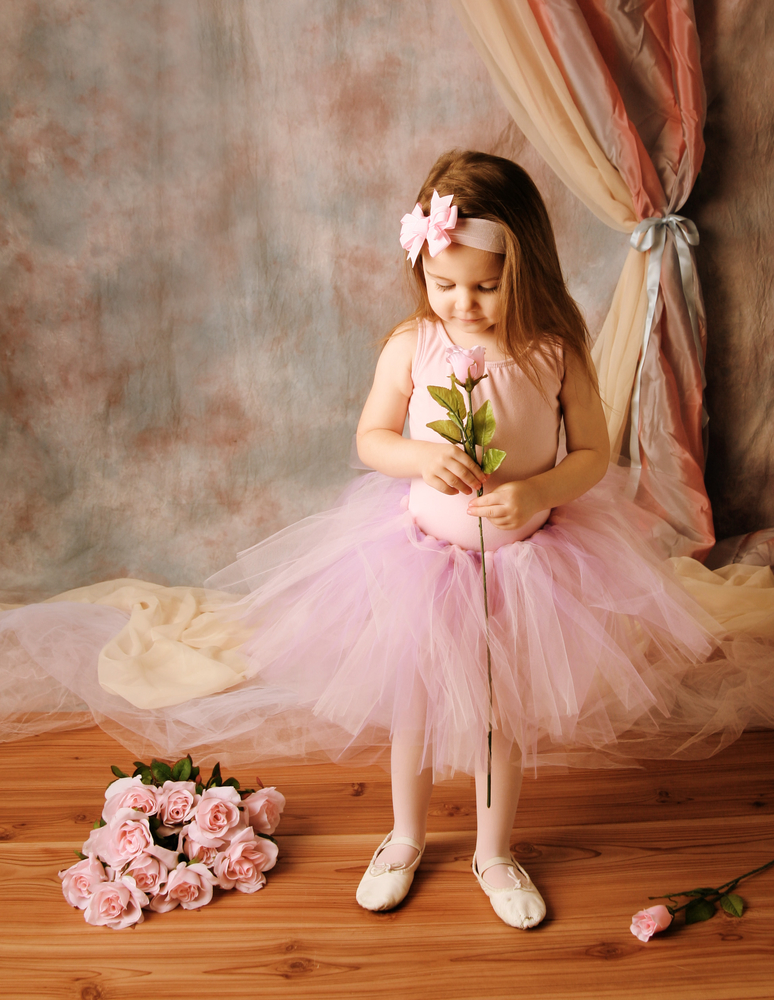
But not just any princess. She wants to be a beautiful princess. And preferably, one who wears pink dresses. And does ballet.

Three years ago, I despised the princess craze. Why would I—I thought at the time—want my daughter to chase after an unattainable physical beauty that only resides in fantasies and Hollywood-style Disney movies?

But here I am, three years later, with a daughter who wants nothing more than to be pretty and to wear nail polish, and who wakes up every morning wanting to don the latest princess fashion.

How did I get here? Believe me, I didn’t promote it.

As much as I’d love to blame Disney, I really can’t. If I did that, then I might as well blame the football manufacturer who designed the kiddie pigskin her twin brother recently used to break a light bulb. Just as he is naturally attracted to physical activity, she has a natural yearning to be physically beautiful. And that latter concept terrifies me.

It scares me to think about my daughter growing up in a culture where a simple trip to the grocery store can turn into a fleshly battle, with society screaming at every turn: “You’re not beautiful enough!” There, on the billboard, is the perfect-looking Hollywood star, telling anyone who happens to look: “This is what you should look like.” And there, on the cover of the checkout-line magazine, is that same woman, only this time she’s lost half of her clothes and is promoting a “secret” diet and exercise routine that helped her lose all of that baby weight and get back down to 98 pounds!

Unless you have $50 million, a live-in nannie, a personal trainer, time to burn and an air brush, who can compete with that? Our culture’s objectification of women is to be loathed, but thankfully, Scripture gives us a better option. So what will I tell my daughter? This:
Continue reading